Golfers from across Europe have been finding their way to the Costa Blanca for decades — and the reasons are straightforward. When courses at home are closed or out of condition, the Costa Blanca is playing through October, November and December without interruption. The climate is stable, Alicante airport is well connected from across Europe, and the southern coastline has a concentration of quality courses within easy driving distance of each other. Many golfers who come for a week eventually start thinking about something more permanent.
Europe's most accessible year-round golf destination
The Costa Blanca has three qualities that set it apart as a golf destination: climate, course density and location.
The climate is the warmest of any European golf coast in winter. From October through to March temperatures run typically between 16 and 20 degrees in the daytime. A round in January is entirely normal. Summer brings higher heat, but with an early tee time the summer rounds are perfectly manageable too.
Course density in the south is exceptional. Within a 30-kilometre radius of Orihuela Costa there are seven or eight significant courses — in many cases accessible from the same residential area. This makes multi-round trips easy without long transfers between courses.
The courses worth knowing
All of the following courses lie within the Orihuela Costa and Torrevieja area — most within 20 minutes of each other by car. A golf week where you play a different course every day is a realistic plan.
Las Colinas is the standout course in the region — and by many measures in all of Spain. It has won the World Golf Awards title of Spain's Best Golf Course five times (2015, 2016, 2017, 2020 and 2021) and features in Golf World's Top 100 Courses in Europe. It is a Cabell Robinson design set within a sweeping natural valley inland from Orihuela Costa. The routing, elevation work and conditioning are at a level the other courses in the area don't match. If you play one special-occasion round on the Costa Blanca, this is it. Green fees reflect the quality — this is the premium option in the cluster.
Lima Villas Collection — villas inside the resort
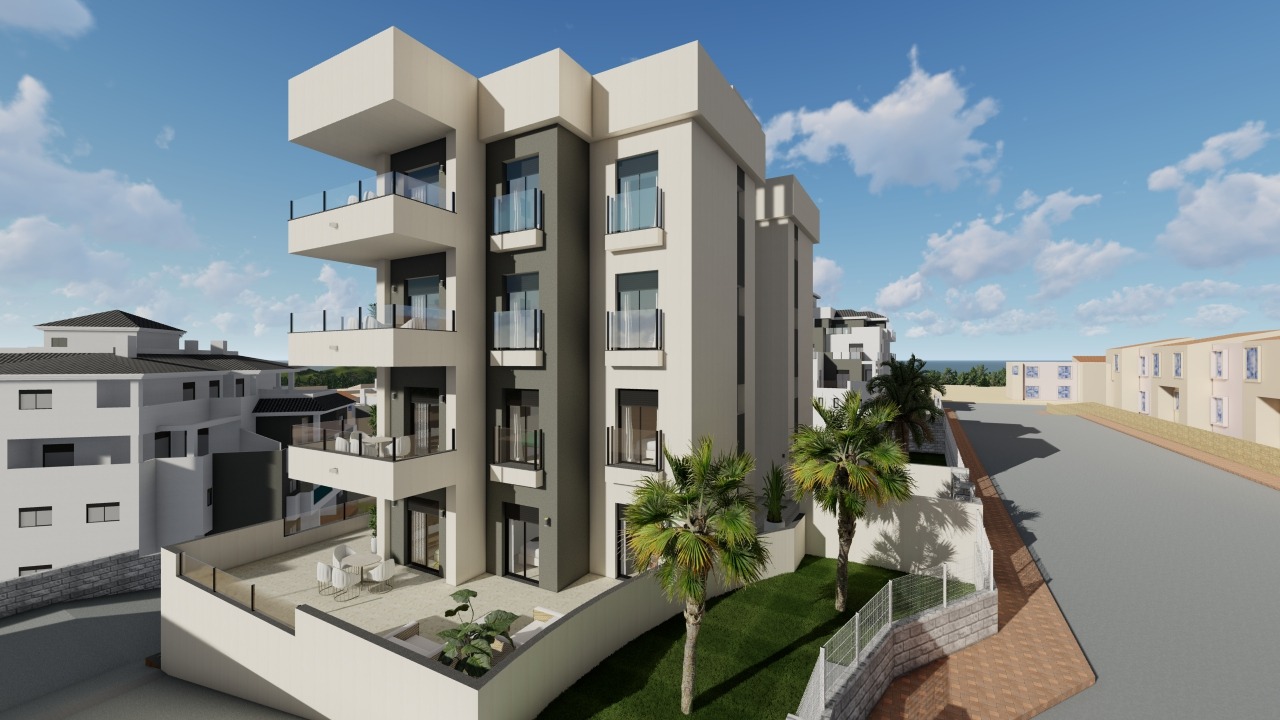
Ten detached villas in the Lima community at Las Colinas, on plots of 644–810 m². Eight are available. Five models, 3–4 bedrooms, private pool, basement level, KNX home automation and underfloor heating. From €1,090,000 + VAT, with two villas completing as early as end of 2026.
View property →Three signature villas — Ensoa, Pebble and Arista
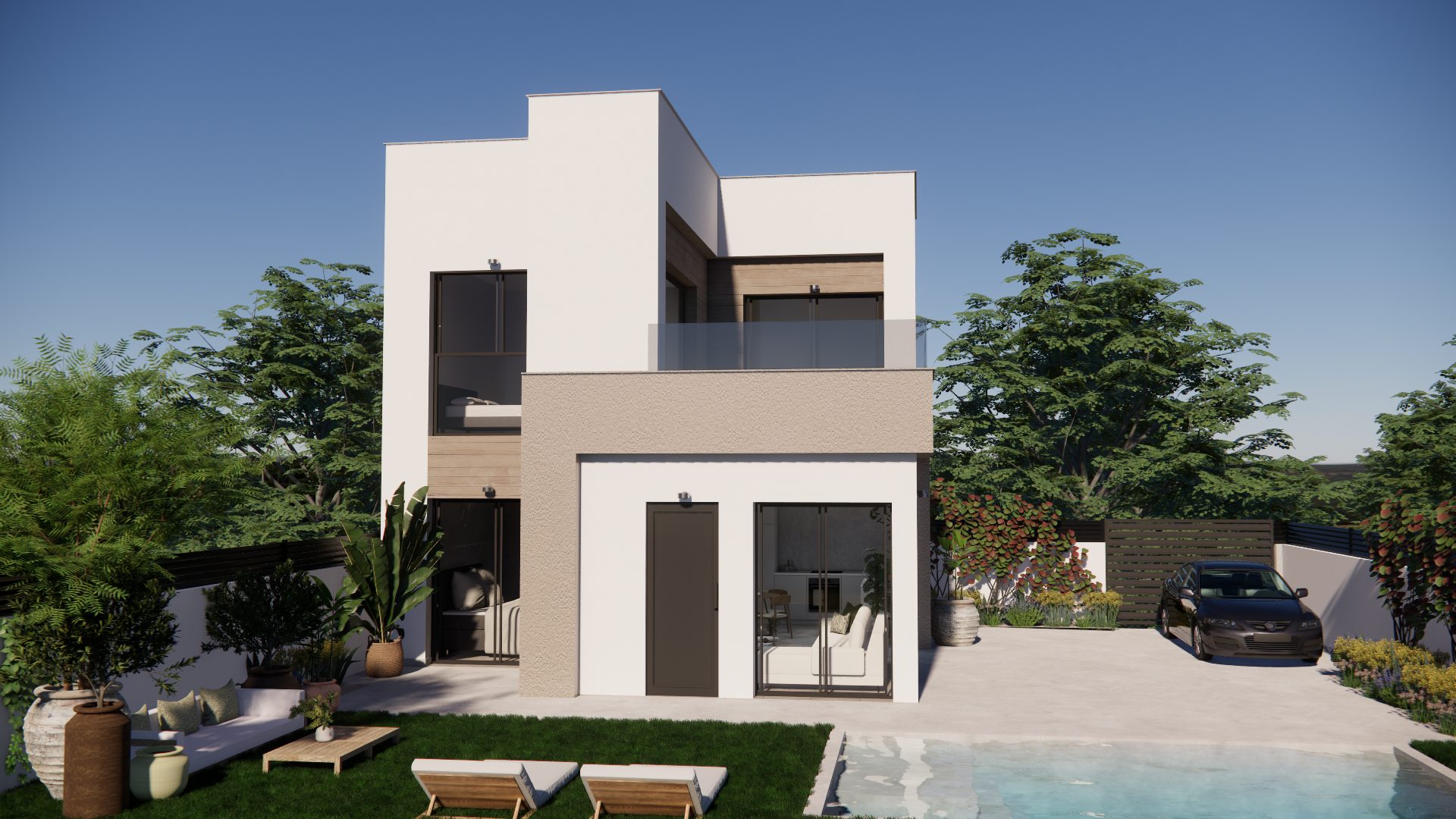
Three individual villas are available in the Mimosa community: Villa Ensoa (key ready, 415 m², infinity pool, €2,450,000), Villa Pebble (key ready, designed by Langarita Navarro, 332 m², €2,365,000) and Villa Arista (completing summer 2027, 482 m², furniture included, €2,490,000). All prices exclude taxes.
See Las Colinas →Villamartin was established in 1972 and is one of the oldest courses in the area. In 1994 it hosted the Mediterranean Open on the European Tour — a fact that says something about its standing. The vegetation is now fully mature and the layout is settled, with wide open fairways that make it a useful test for golfers of all levels. It sits close to Las Ramblas and Campoamor, making three-course golf weeks easy to build from this area.
Las Ramblas stands apart from the other courses in the area. The terrain is genuinely natural with elevation changes and tighter fairways — straight hitting matters here more than distance. This makes it more interesting on a return visit when you know the course. In terms of difficulty it sits noticeably above the wider layouts nearby, which makes mixed-ability group rounds more of a challenge but also more memorable.
Campoamor is set between two valleys, giving it a sheltered character that feels different from the exposed coastal layouts. It is not always the first course mentioned on a recommended list, but it performs well: good condition, consistent play and it works well paired with Villamartin or Las Ramblas in the same week. The residential community around it is long-established.
La Finca is a more modern course within a resort setting. Wider fairways than many neighbouring courses make it the more forgiving option — well suited to groups where players are at different levels. It is well maintained and appears on most regional golf travel itineraries as a reliable day out.
Lo Romero sits slightly south of the main Orihuela Costa cluster near Pilar de la Horadada. It is known for its finishing hole, which is considered one of the most visually distinctive in the area, and it is one of the more affordably priced significant courses in the region — making it a sensible choice when spreading a week's green fee budget. Not the most technically demanding on this list, but a solid and enjoyable day out.
Vista Azul XXXIV — on the course itself
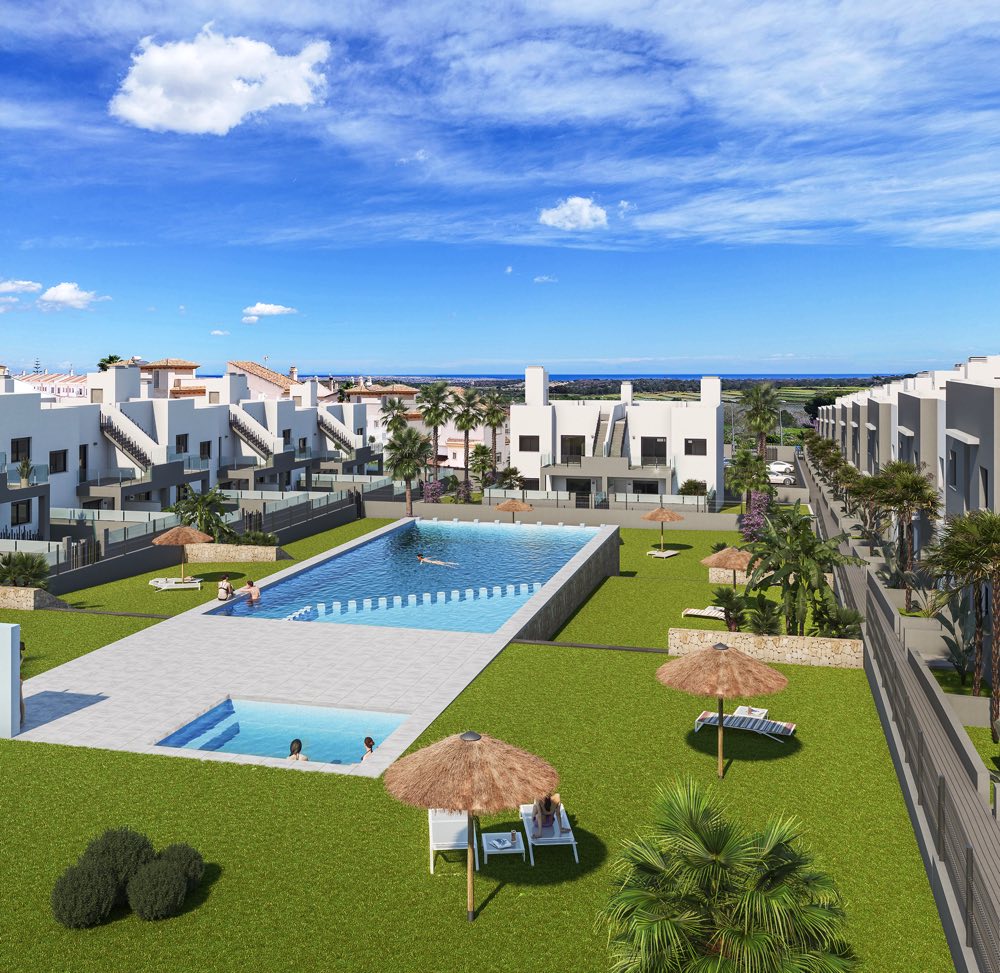
Vista Azul XXXIV is being built on the edge of Lo Romero Golf itself: 12 bungalow homes with 3 bedrooms and 2 bathrooms. The ground-floor homes have front and back terraces; the upper homes have their own 67 m² solarium looking over the fairways. Parking, a communal pool and a children's pool are included. From €284,900 + IVA, delivery March 2028.
View property →Vista Azul XXXVIII Lo Monte — Lo Romero 6 km · Las Colinas 7 km
Vista Azul XXXVIII Lo Monte is set in the established Lo Monte area of Pilar de la Horadada. Lo Romero Golf is just 6 km away (~9 min drive) and Las Colinas Golf & Country Club approximately 7 km — two quality courses within 10 minutes. The development offers ground-floor bungalows, upper-floor bungalows and penthouses from €299,900.
View property →OLA Luxury Apartments — Lo Romero Golf 5 km
OLA is a luxury bungalow development in Pilar de la Horadada, just 5 km from Lo Romero Golf. The same developer's previous project in this area sold out entirely. OLA offers 2- and 3-bedroom bungalows with private garden or private solarium, smart home automation and a heated community jacuzzi. From €255,000 + IVA. Delivery October 2026.
View property →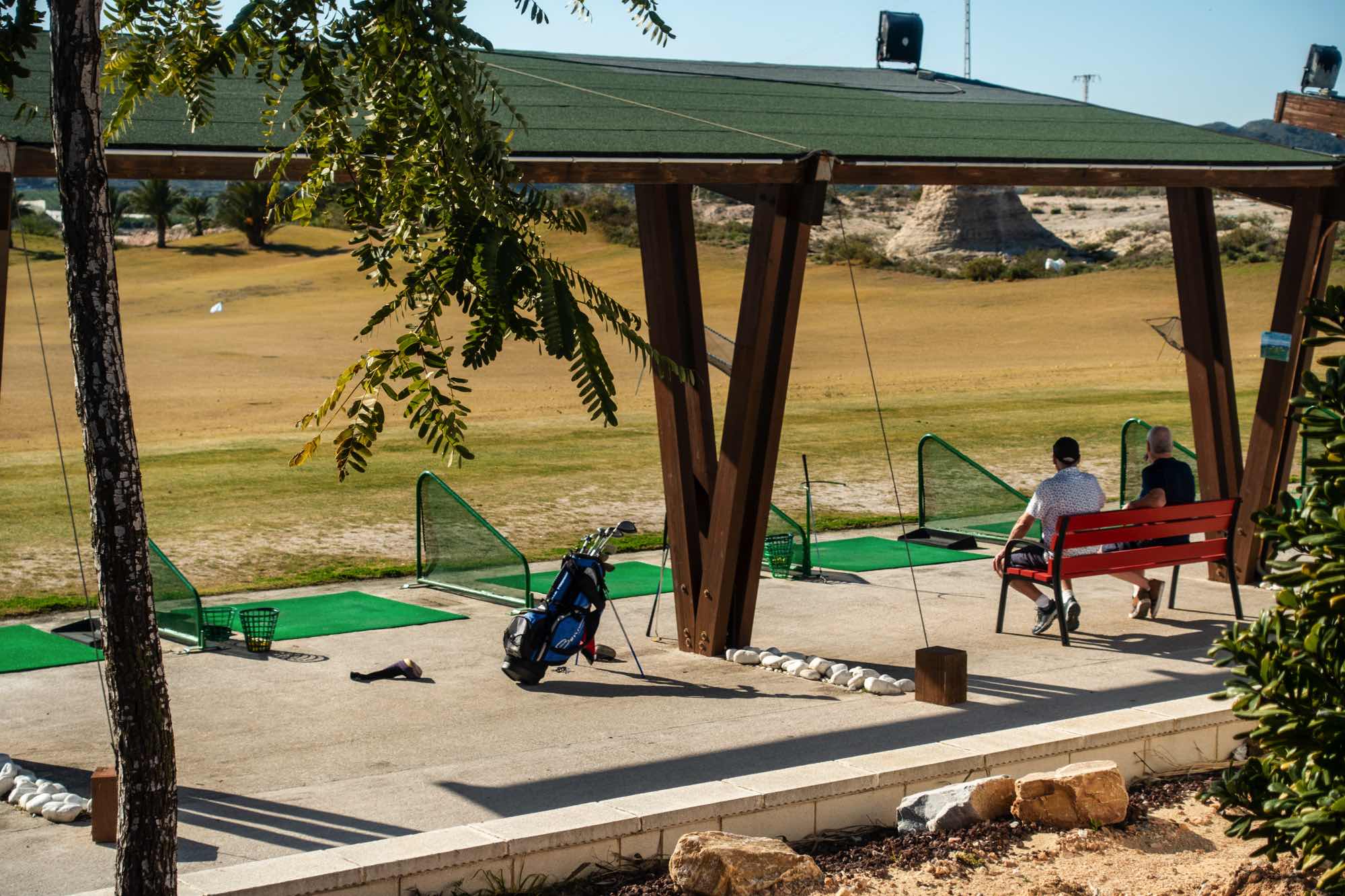
Vistabella is a relatively new course — it opened in 2009 and was completed as a full 18-hole layout in January 2018. It was designed by Manuel Piñero, a former European Tour winner and Ryder Cup player for Spain. The course is set among citrus groves near the inland village of Orihuela-Jacarilla, with four tee options per hole to suit a wide range of playing levels. Vistabella has a reputation for excellent greens and a serious practice facility: 23 floodlit practice bays, a putting green and a private coaching room make it a good choice for golfers who want to put in some range time alongside their rounds.
Alba Salina 4 — Villa Atenea directly on the Vistabella Golf course
Alba Salina 4 is an exclusive villa development set directly alongside the Vistabella Golf course in Rojales. Phase 2 has just been released: 13 villas available in total — 4 from Phase 1 (January 2027 delivery) and 9 from Phase 2 (November 2027). Every villa includes a private pool (2.5 × 4.5 m), 3 bedrooms and a garage. From €355,900 + VAT.
View property →La Marquesa is located close to Ciudad Quesada in Rojales and is one of the longer-established courses in the area. A consistent, well-maintained 18-hole layout that suits players at different levels — this is the course you bring a less experienced player to without worrying about pace. The golf community around Quesada is long-standing and international, particularly popular with British and Nordic residents. The course is approximately 2 km from Rojales town centre.
Alba Salina 5 — Right next to La Marquesa Golf · 14 apartments with private jacuzzi
Alba Salina 5 is a brand-new apartment development in Rojales, situated right next to La Marquesa Golf — ideal for both golfers and golf tourism rentals. 14 apartments, 2 bedrooms, private jacuzzi and a garden or solarium in every unit. Launch offer: private jacuzzi + parking space included. From €261,900 + IVA. Delivery spring 2027.
View property →Alba Salina 2 Phase 3 — La Marquesa Golf 2 km · Four courses nearby
Alba Salina 2 Phase 3 is a new attached villa development in Rojales with La Marquesa Golf just 2 km away (~3 min drive). Every villa includes a private pool and full basement (59.25 m²). Three Phase 3 units remain, delivering July 2026. From €369,900 + VAT.
View property →
Alenda Golf is a tranquil golf and residential resort set in the heart of the Costa Blanca, combining sport, nature and lifestyle living. Located near Alicante and Elche with easy access from the motorway, the 18-hole course offers an enjoyable challenge for golfers of all levels. The par 72 layout designed by Roland Favrat stretches around 6,200 metres, with panoramic views of the Sierra de las Águilas across varied terrain. The resort includes a residential community of villas, apartments and building plots — an option worth knowing for those considering a golf-front base. Facilities include a clubhouse, practice facilities, gym, supermarket and dining.
Allure — ground-floor apartments directly on the Alenda Golf course
Allure is a high-quality development set directly alongside the Alenda Golf course. Phase 1 is sold out — Phase 2 offers 4 remaining units: 2-bedroom ground-floor apartments with private gardens. From €270,000 + IVA. Delivery September 2027.
View property →Fewer courses, more scenery
The north of the Costa Blanca — from Alicante northward through Dénia, Jávea and up towards Benicàssim — is a different golf landscape. There are fewer courses and they are more spread out, but the terrain is more varied: mountains, coves and nature reserves make for visually richer golf experiences.
Club de Golf Jávea (18 holes) is the main course in the area, with good conditioning standards and striking surroundings. La Sella Golf near Dénia is a 27-hole facility offering more variety in a single visit. Meliá Villaitana near Benidorm has two 18-hole courses within a large resort. These courses don't cluster as conveniently as the southern group, but the North Costa Blanca rewards in other ways — quieter roads, smaller towns and a more distinct character.
When a week starts to feel too short
For most visiting golfers, the first Costa Blanca experience is a week's holiday. You play five or six courses, find your favourites, discover that the winter air suits you — and then after a few such trips the question starts to form: what if you had a base here?
Golfers who buy property on the Costa Blanca almost always want to be within easy reach of a course — not because they live on the golf course, but because a ten-minute drive makes a spontaneous round possible. That changes how often you actually play.
The south of the Costa Blanca is exceptional in this respect: from most residential areas you can reach three or four different courses within the same 30-minute drive. It is a quality of life feature that is easy to underestimate until you are actually living with it.
Sol Natura — between two golf courses
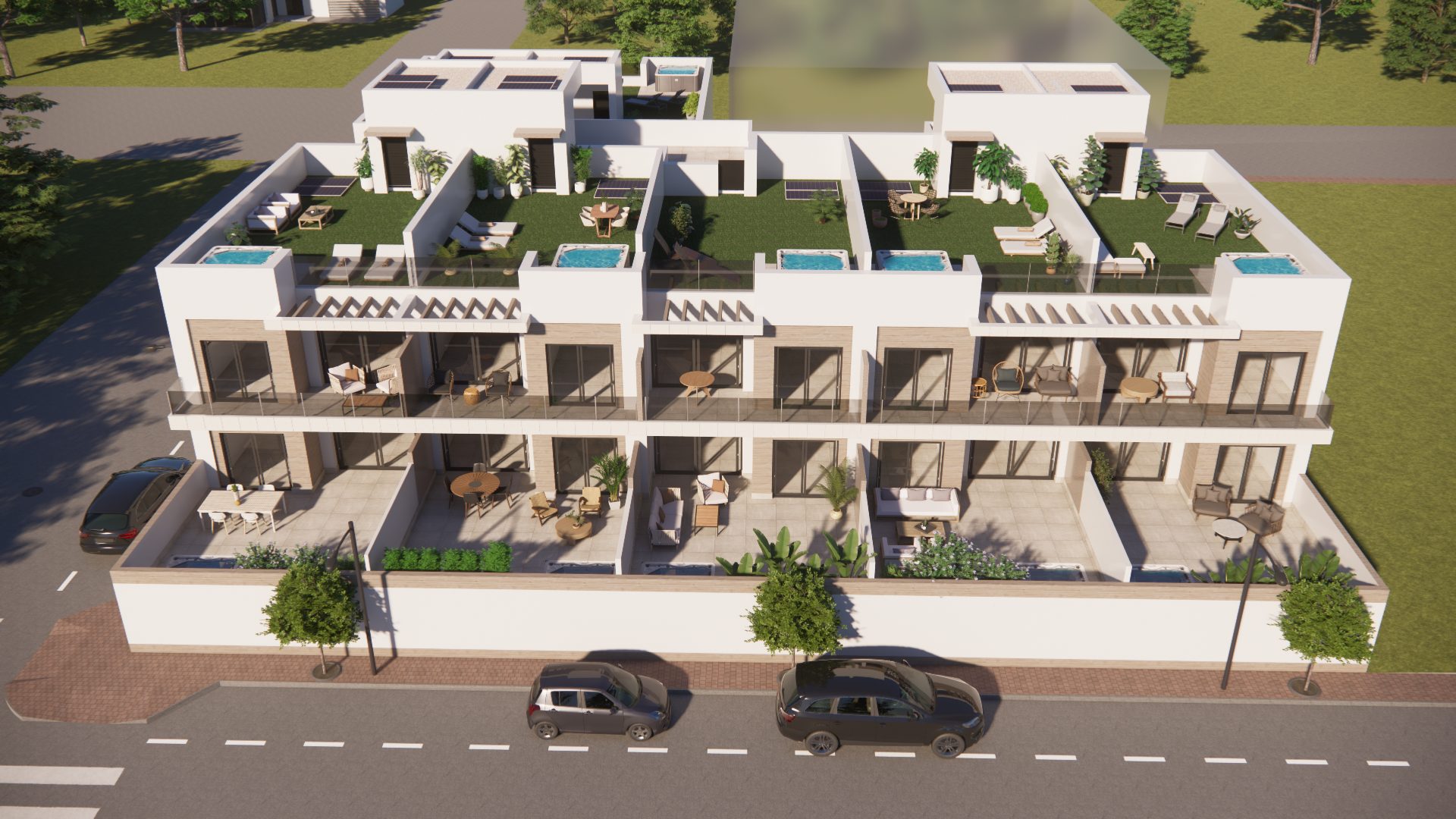
Sol Natura in Torrevieja is an unusual case: it is literally built between two golf courses, surrounded by pine forest. The development offers ground-floor bungalows with private gardens and top-floor apartments with a 67.5 m² private rooftop solarium and sea views. Delivery is September 2026 and prices start at €243,800.
View property → All properties →SunGolf Beach — Campoamor & Villamartín 2 km away
SunGolf Beach Phase IV sits in Dehesa de Campoamor, with Campoamor Golf just 2 km away and Villamartín Golf 2 km in the other direction — both under 6 minutes by car. Eight south-facing apartments, 2 bedrooms, 2 bathrooms, underground parking included. Delivery November 2026 from €255,000.
View property → All properties →The seasons through a golfer's eyes
Golf is possible year-round, but each season has its own character. Autumn and spring are often optimal, winter is a pleasant surprise for visitors from colder climates, and summer is entirely manageable — with an early tee time.
Before you go
- Book tee times in advance, especially in the winter and autumn season. The most in-demand slots — a good morning start on a weekend — are often gone long before you arrive.
- A hire car is close to essential. While courses are near each other, public transport doesn't work for golf equipment. Cars are available directly at Alicante airport.
- Las Colinas does not always offer individual visitor rounds — always check their booking page or contact directly. Some courses here operate partly on membership models.
- Early tee times in summer often mean significantly lower green fees and a quieter course. Summer golf is not as difficult as many assume — it is simply hot after noon.
- Visiting players are accepted at most courses on this list without prior requirements. Check handicap requirements in advance particularly for Las Colinas.
- Your weekly green fee budget varies considerably based on which courses you choose. Mixing a premium round (Las Colinas) with two or three more affordable courses (Lo Romero, La Marquesa) gives variety without breaking the budget.